
The Active Woman’s Guide to Protecting Your Joints (and Mastering the Stairs)
Jun 07, 2026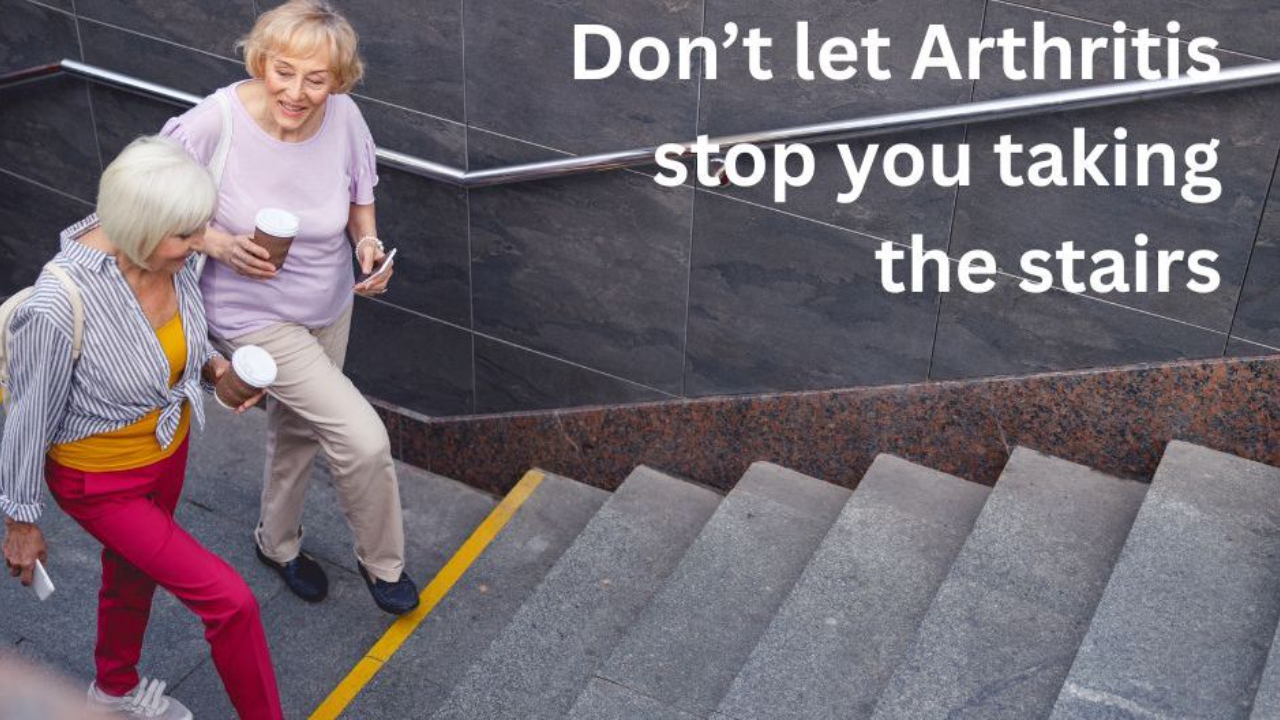
If you are a woman in your 50s or 60s who has always prided herself on being active, receiving a osteoarthritis diagnosis can feel like an unwelcome wake-up call.
You love your morning walks, your swim sessions, or your weekly fitness classes. You have zero intention of slowing down. But lately, you’ve noticed a slight catch or a dull ache when walking down the stairs first thing in the morning.
Your biggest goal right now is prevention. You want to nip this in the bud and ensure that "mild" arthritis stays mild, so you can keep hiking, traveling, and staying independent for decades to come.
But here is where many active women get stuck. You’ve been told to "stay active," so you just do more of what you’ve always done—walking further or pushing through a new exercise class. Yet, the stairs still don't feel quite right.
To understand why, we have to look at how the human body actually moves. In rehab therapy, we call this the Lower Extremity Kinetic Chain. But I like to call it your Leg Team.
The Science of the "Leg Team"
Your lower body doesn't move in fragments. In biomechanics, a "kinetic chain" means that what happens at one joint directly affects the joints above and below it. When you take a step, especially a challenging one like walking down the stairs, three major players have to work in perfect harmony to handle your body weight:
-
The Hip: Your powerhouse anchor and stabilizer.
-
The Knee: Your hinge and primary shock absorber.
-
The Foot & Ankle: Your foundation and steering wheel.
When you have mild arthritis in your knee or hip, that specific joint has slightly less natural cushioning than it used to. It is more vulnerable. If the other members of the team aren't doing their fair share, that vulnerable joint takes a beating.
The "Three-Legged Race"
To see how this plays out in real life, think back to the three-legged races from school sports days.
Imagine you are strapped to a partner, and you both need to run toward the finish line. If you are both moving at the same pace, lifting your legs in rhythm, and sharing the weight evenly, you glide across the grass smoothly.
But now imagine your partner suddenly gets incredibly stiff, slows down, and stops pulling their weight. To keep moving forward, you have to drag them along. Your own leg has to work twice as hard, absorbing all the awkward tugs, twists, and extra weight of a partner who isn't helping.
Before long, your leg is exhausted, strained, and aching.
When you feel an ache in your arthritic hip or knee on the stairs, that joint is essentially dragging a partner who has stopped running. If your ankle is too stiff to absorb the shock, or your hip muscles are "asleep" and not stabilizing you, your knee gets stuck doing 100% of the work. Your pain isn't a sign of total failure—it's just a joint that is exhausted from carrying its partner.
What the Research Says
This isn’t just a nice theory; it is heavily backed by clinical research.
Numerous sports medicine and orthopaedic studies have looked into why active people experience increased knee pain on stairs. Time and again, researchers find two major culprits outside of the knee itself:
-
Hip Weakness (The Slacking Glutes): Studies show that women with knee discomfort often have underlying weakness in their Gluteus Medius—the side-hip muscle responsible for keeping your pelvis level. If that hip muscle is asleep, your pelvis drops when you step down, causing the knee to collapse inward. This places an immense, unnatural twist directly onto an arthritic joint.
-
Stiff Ankles (The Poor Foundation): Walking down a step requires a significant amount of ankle flexibility (specifically dorsiflexion, or the ability to bend your foot upward toward your shin). If your ankle is even slightly stiff from past sprains, tight calves, or years of running, your body compensates by forcing the knee forward over the toe at an aggressive angle, drastically increasing the joint pressure.
There are a lot of fantastic gait-analysis studies in orthopaedic medicine showing that when we step down, our knees take about 3 to 4 times our body weight. Biomechanical research shows that if your side-hip muscles (the Gluteus Medius) are weak, or your ankles are too stiff to bend properly, your body forces the knee to twist inward or push too far forward to compensate. You aren't just treating a knee; you're retraining how those joints talk to each other!
Future-Proofing Your Body in 15 Minutes a Day
Here is the incredibly good news: because your arthritis is mild, you are in the absolute prime position to future-proof your mobility.
You can’t change the clock, and you can't magically erase mild wear-and-tear overnight. But you can change the workload.
You don't need gruelling rehab or hours at the gym. You just need to build residual strength and coordination across the entire Leg Team. By spending just 15 minutes a day waking up your side-hip muscles and improving your ankle mobility, you build a protective shield of support around your knees and hips.
When the team works together, the load is shared, the extra friction disappears, and taking the stairs becomes a smooth, confident movement again.
Keep Doing What You Love
You’ve built a beautifully active lifestyle, and you deserve to keep it. Let's make sure your movement strategy is actually supporting your joints, not just testing them.
If you’re ready to stop second-guessing your workouts, eliminate that morning stair-dread, and ensure your mild arthritis doesn’t get in the way of your active future, I have 3 exercises to make stairs feel easier.
Click here to download my FREE Guide to Make stairs feel easier without aggravating knee or hip arthritis, and let's get your Leg Team working together today.
Stay connected with news and updates!
Join the Total Pilates mailing list to receive the latest news and updates on movement, nutrition, and self-care.
Don't worry, your information will not be shared.
